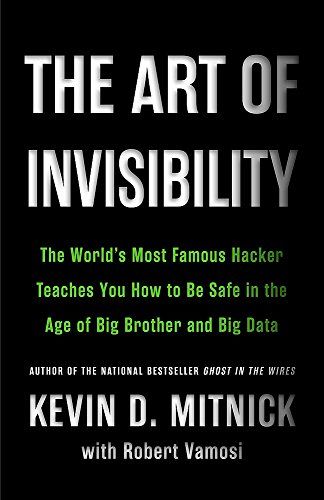
The Art of Invisibility
The World's Most Famous Hacker Teaches You How to Be Safe in the Age of Big Brother and Big Data
Mitnick's accessible tour of personal privacy and anonymity, from passwords and Wi-Fi to layered operational tradecraft, told through anecdotes and step-by-step advice.
As an Amazon Associate we earn from qualifying purchases. The link above is sponsored.
- Authors
- Kevin Mitnick,Robert Vamosi
- Published
- 2017
- Publisher
- Little, Brown and Company
- Pages
- 320
- Language
- English
Prerequisites
None. Written for ordinary readers worried about surveillance, not for practitioners.
Read this if
General readers and beginners who want a readable introduction to privacy threats and the everyday habits that reduce their exposure.
Skip this if
Anyone needing current, precise opsec. Much of the tooling and operational advice has aged, and the threat model swings between casual-snooping and nation-state without clarifying which you actually face.
Key takeaways
- Most privacy loss is mundane: weak passwords, metadata, and convenient defaults, not exotic attacks.
- Real anonymity is layered and effortful; a single tool like a VPN or Tor solves only part of the problem.
- Your threat model determines everything, and conflating petty trackers with state adversaries leads to advice that fits neither.
Notes
A genuinely fun read that makes privacy feel concrete, but treat it as motivation rather than a current manual. Written in 2017, much of the specific tooling and tradecraft has dated, and the book lurches between defending against advertisers and evading governments without telling you which fight is yours. Read it for the mindset, then verify every concrete recommendation elsewhere.
What to read before
What to read before The Art of Invisibility →Beginner · 2014
Anonymat sur Internet
A practical French guide to online anonymity and privacy — proxies, VPNs, Tor, secure messaging and mobile — by a Le Monde cybersecurity journalist (later one of the Pegasus reporters).
Beginner · 2024
Hacks, Leaks, and Revelations
Micah Lee on the operational craft of working with leaked datasets: authentication, OPSEC for sources and journalists, and the Python tooling to actually parse what arrives in your dropbox.
Intermediate · 2024
Extreme Privacy
Michael Bazzell's defender-side companion to OSINT Techniques: a step-by-step program for removing yourself from data brokers, public records, and the everyday surveillance economy without going off-grid.
What to read next
What to read after The Art of Invisibility →Intermediate · 2024
Extreme Privacy
Michael Bazzell's defender-side companion to OSINT Techniques: a step-by-step program for removing yourself from data brokers, public records, and the everyday surveillance economy without going off-grid.
Beginner · 2014
Anonymat sur Internet
A practical French guide to online anonymity and privacy — proxies, VPNs, Tor, secure messaging and mobile — by a Le Monde cybersecurity journalist (later one of the Pegasus reporters).
Intermediate · 2024
OSINT Techniques
Michael Bazzell's relentlessly updated technical manual for finding people, accounts, breach data, geolocation evidence, and online identifiers — the de facto reference of the modern OSINT field.
Explore similar books
Alternatives to The Art of Invisibility →Beginner · 2014
Anonymat sur Internet
A practical French guide to online anonymity and privacy — proxies, VPNs, Tor, secure messaging and mobile — by a Le Monde cybersecurity journalist (later one of the Pegasus reporters).
Intermediate · 2024
Extreme Privacy
Michael Bazzell's defender-side companion to OSINT Techniques: a step-by-step program for removing yourself from data brokers, public records, and the everyday surveillance economy without going off-grid.
Beginner · 2024
Hacks, Leaks, and Revelations
Micah Lee on the operational craft of working with leaked datasets: authentication, OPSEC for sources and journalists, and the Python tooling to actually parse what arrives in your dropbox.