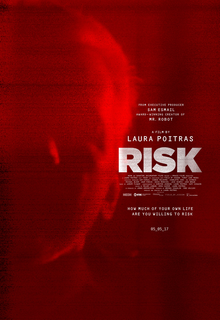
Risk
Laura Poitras's follow-up to Citizenfour, filmed inside the WikiLeaks orbit from 2011 through Assange's London embassy years, with extensive access to Sarah Harrison, Jacob Appelbaum, and Assange himself.
- Directors
- Laura Poitras
- Released
- 2016
- Writers
- Laura Poitras
- Runtime
- 92 min
- Language
- English
Available on
Watch this if
Anyone who watched Citizenfour and wants Poitras's continuation of the same documentary practice — patient, observational, ethically uncomfortable. The film is hardest to watch when it should be: moments of personal disappointment, including with people Poitras herself trusted.
Skip this if
Viewers wanting a tidy narrative or hagiography. The film makes the aesthetic choice to keep the camera running through ethically charged moments and trust the viewer with the discomfort.
Key takeaways
- Poitras's recut after the 2016 election (her second cut is the canonical version) folds in the change in the political stakes; both versions are worth watching.
- The Appelbaum subplot — Poitras's voiceover acknowledgment of what she knew and when — is the documentary-ethics question the film stakes itself on.
- Assange's media performance and self-curation come through more clearly here than in any other source; the film records the gap between persona and practice without underlining it.
Notes
Pair with Citizenfour (Poitras), with The Fifth Estate as a Hollywood-version negative example, and with Andy Greenberg's reporting on the Equation Group / Shadow Brokers for the contemporaneous geopolitical context. The film does not tell you what to think; that is its strength and its frustration. Required viewing for anyone teaching media ethics in the security context.