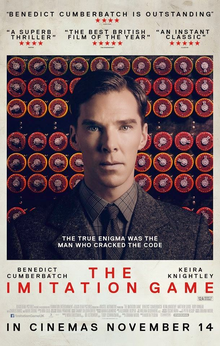
The Imitation Game
Biographical drama on Alan Turing's work breaking Enigma at Bletchley Park, based on Andrew Hodges' biography. Compresses and dramatizes the historical record but introduces general audiences to wartime cryptanalysis.
- Directors
- Morten Tyldum
- Released
- 2014
- Writers
- Graham Moore
- Runtime
- 114 min
- Language
- English
Available on
Watch this if
General audiences who need an entry point to the Bletchley story. Cumberbatch's Turing pulled a generation toward the history and the man, both worthwhile destinations.
Skip this if
Cryptographers, historians, or anyone who has read Hodges' biography. The film invents conflicts (the Cairncross plotline, Turing-as-team-conflict-driver) that did not happen and underplays the team effort that actually broke Enigma.
Key takeaways
- Turing's persecution under the 1952 Labouchère Amendment is the part the film gets right and the part everyone needs to know.
- Bletchley was an industrial-scale cryptanalysis effort, not a single-genius story; the film's compression is its single biggest historical sin.
- The Bombe was an electromechanical predecessor to programmable computing; the leap from Enigma break to general-purpose computer is one of the cleanest causal lines in tech history.
Notes
Won the 2015 Oscar for Best Adapted Screenplay despite the historians' complaints. Treat it as a gateway, not a source. Read Hodges' Alan Turing: The Enigma after, then Sinkov's Elementary Cryptanalysis if you want to actually do the math. The Imitation Game pairs surprisingly well with Cryptography Engineering as a "why does this matter" lead-in for an undergraduate.