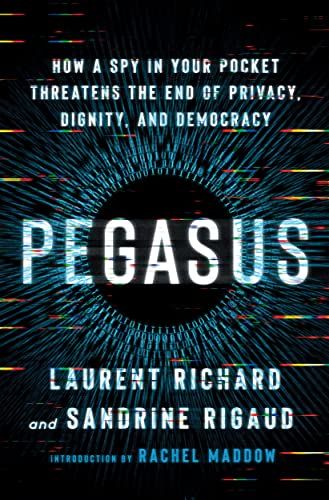
Pegasus
How a Spy in Your Pocket Threatens the End of Privacy, Dignity, and Democracy
The inside story of the Forbidden Stories investigation into NSO Group's Pegasus spyware, told by the journalists who ran it. The best narrative account of what commercial zero-click surveillance actually does to its targets.
As an Amazon Associate we earn from qualifying purchases. The link above is sponsored.
- Authors
- Laurent Richard,Sandrine Rigaud
- Published
- 2023
- Publisher
- Henry Holt and Co.
- Pages
- 336
- Language
- English
Prerequisites
None. The authors explain the technology as they go; the security concepts are kept deliberately accessible.
Read this if
Journalists, activists, and anyone who wants to understand the mercenary spyware market and how a cross-border investigation gets built and protected.
Skip this if
Readers wanting forensic depth on the exploits or IOCs. Skip this if you came for Citizen Lab-grade technical analysis rather than the human and political story.
Key takeaways
- Zero-click exploitation removes the user from the security model entirely; there is no link not to tap and no mistake to avoid.
- A commercial vendor selling to governments launders state surveillance through a layer of plausible deniability that NSO exploits relentlessly.
- The targets were not just terrorists and criminals as advertised, but journalists, lawyers, activists, and heads of state.
Notes
Reads like a thriller because it was one: the journalists were investigating a weapon that could have been turned on them mid-investigation. It is stronger on stakes and tradecraft than on technical mechanism, and occasionally leans on its own drama, but no other book conveys so clearly that the surveillance-for-hire industry is a present reality, not a future risk.
What to read before
What to read before Pegasus →Beginner · 2019
Permanent Record
Edward Snowden's first-person memoir: the technical work that led him into the NSA's mass-surveillance programs, his reasoning for disclosure, and the Hong Kong handoff to the journalists who broke the story.
Beginner · 2020
À la trace
An investigative map of modern surveillance — from data brokers and facial recognition to contact-tracing — charting how continuous digital tracking became normal, by a French tech journalist.
Beginner · 2024
Dark Wire
Journalist Joseph Cox's account of Anom, the encrypted phone company secretly run by the FBI from 2018 to 2021, and of the global wave of arrests that followed Operation Trojan Shield.
What to read next
What to read after Pegasus →Beginner · 2019
Permanent Record
Edward Snowden's first-person memoir: the technical work that led him into the NSA's mass-surveillance programs, his reasoning for disclosure, and the Hong Kong handoff to the journalists who broke the story.
Intermediate · 2021
RGPD et droit des données personnelles
A complete French manual on data-protection law under the GDPR and the 2018 loi Informatique et Libertés — obligations, rights and how to comply — by an engineer and doctor of law.
Beginner · 2020
À la trace
An investigative map of modern surveillance — from data brokers and facial recognition to contact-tracing — charting how continuous digital tracking became normal, by a French tech journalist.
Explore similar books
Alternatives to Pegasus →Beginner · 2019
Permanent Record
Edward Snowden's first-person memoir: the technical work that led him into the NSA's mass-surveillance programs, his reasoning for disclosure, and the Hong Kong handoff to the journalists who broke the story.
Beginner · 2024
Dark Wire
Journalist Joseph Cox's account of Anom, the encrypted phone company secretly run by the FBI from 2018 to 2021, and of the global wave of arrests that followed Operation Trojan Shield.
Beginner · 2020
À la trace
An investigative map of modern surveillance — from data brokers and facial recognition to contact-tracing — charting how continuous digital tracking became normal, by a French tech journalist.