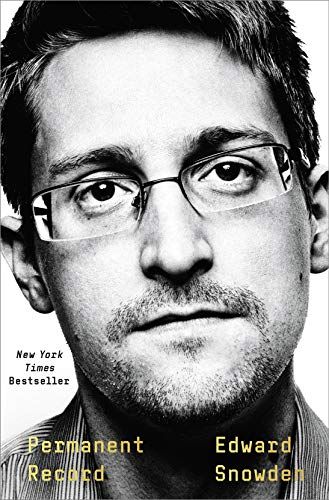
Permanent Record
Edward Snowden's first-person memoir: the technical work that led him into the NSA's mass-surveillance programs, his reasoning for disclosure, and the Hong Kong handoff to the journalists who broke the story.
As an Amazon Associate we earn from qualifying purchases. The link above is sponsored.
- Authors
- Edward Snowden
- Published
- 2019
- Publisher
- Metropolitan Books
- Pages
- 352
- Language
- English
Read this if
Anyone who wants the inside view of the 2013 NSA disclosures from the source rather than the press coverage. Also a useful read for engineers thinking about institutional ethics — Snowden's argument is technical and procedural, not abstract.
Skip this if
Readers wanting an unvarnished, multi-perspective account of the disclosures; this is Snowden's narrative on his terms. Pair with Glenn Greenwald's No Place to Hide and Bart Gellman's Dark Mirror for the journalism-side counterweight.
Key takeaways
- The technical case for the disclosures is sharper than the political coverage ever made it: Snowden walks through the specific architectures and capabilities that violated his oath.
- The personal-cost chapters are the underrated half of the book; whistleblowing is structurally discouraged because the pipeline is set up to make life miserable for the person who goes through it.
- Operational privacy is illustrated, not preached — the book is itself an artifact of careful OPSEC, and that lesson is worth more than any single chapter.
Notes
Read after Extreme Privacy (Bazzell) and Sandworm (Greenberg) for the technical and geopolitical scaffolding. The contemporaneous reporting at The Intercept and the Snowden Archive (Canadian Journalists for Free Expression) are the primary sources behind the book's claims. The royalties are subject to a US judgment to the government — buying it indirectly funds privacy-litigation organizations Snowden has assigned proceeds to.
What to read before
What to read before Permanent Record →Beginner · 2023
Pegasus
The inside story of the Forbidden Stories investigation into NSO Group's Pegasus spyware, told by the journalists who ran it. The best narrative account of what commercial zero-click surveillance actually does to its targets.
Beginner · 2020
À la trace
An investigative map of modern surveillance — from data brokers and facial recognition to contact-tracing — charting how continuous digital tracking became normal, by a French tech journalist.
Beginner · 2016
Surveillance://
A lucid, accessible case for digital privacy — how mass surveillance works, why it matters, and concrete ways to take back control — by the founder of Mozilla Europe.
What to read next
What to read after Permanent Record →Beginner · 2023
Pegasus
The inside story of the Forbidden Stories investigation into NSO Group's Pegasus spyware, told by the journalists who ran it. The best narrative account of what commercial zero-click surveillance actually does to its targets.
Intermediate · 2021
RGPD et droit des données personnelles
A complete French manual on data-protection law under the GDPR and the 2018 loi Informatique et Libertés — obligations, rights and how to comply — by an engineer and doctor of law.
Beginner · 2020
À la trace
An investigative map of modern surveillance — from data brokers and facial recognition to contact-tracing — charting how continuous digital tracking became normal, by a French tech journalist.
Explore similar books
Alternatives to Permanent Record →Beginner · 2023
Pegasus
The inside story of the Forbidden Stories investigation into NSO Group's Pegasus spyware, told by the journalists who ran it. The best narrative account of what commercial zero-click surveillance actually does to its targets.
Beginner · 2020
À la trace
An investigative map of modern surveillance — from data brokers and facial recognition to contact-tracing — charting how continuous digital tracking became normal, by a French tech journalist.
Beginner · 2016
Surveillance://
A lucid, accessible case for digital privacy — how mass surveillance works, why it matters, and concrete ways to take back control — by the founder of Mozilla Europe.