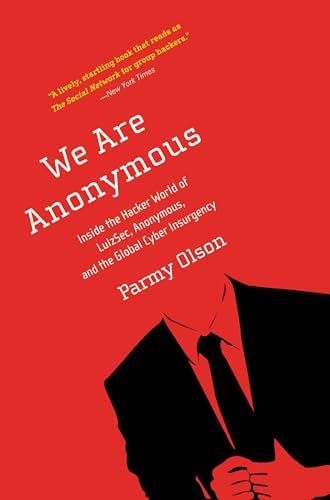
We Are Anonymous
Inside the Hacker World of LulzSec, Anonymous, and the Global Cyber Insurgency
Parmy Olson's reconstruction of LulzSec, AntiSec, and the early-2010s Anonymous moment — the chat logs, the infighting, the Sabu turn, and the FBI takedown that ended the era.
As an Amazon Associate we earn from qualifying purchases. The link above is sponsored.
- Authors
- Parmy Olson
- Published
- 2012
- Publisher
- Little, Brown and Company
- Pages
- 528
- Language
- English
Read this if
Anyone who wants to understand where the modern hacktivism, leak-site, and ransomware-cartel narratives came from. The book is also a sober case study in how loose offensive collectives actually operate — the social dynamics, the OPSEC failures, the personal costs.
Skip this if
Readers wanting deep technical detail. Olson is a journalist; the book is the human story, not the SQLi technique. Pair with the original IRC logs and indictments if you want primary sources.
Key takeaways
- Anonymous was never an organization; the book documents how that absence was both its strength and its eventual undoing.
- Most of the operational failures were OSINT failures — reused handles, leaked photos, IRC logs, ego — not exploitation failures.
- The line between activism, criminality, and informant work is thinner and more contingent than any of the participants realized at the time.
Notes
Read it alongside Sandworm (Greenberg) and Kingpin (Poulsen) for a three-volume picture of how the criminal-and-political hacking ecosystem matured between 2008 and 2018. The Hector 'Sabu' Monsegur arc is the central tragedy; the book treats it carefully without flattening it. Dated only in that the actors have moved on — the dynamics it documents are the template the modern leak-site era runs on.
What to read before
What to read before We Are Anonymous →Beginner · 2019
Cult of the Dead Cow
Joseph Menn's history of cDc — the Texas-rooted hacking collective that coined 'hacktivism', shipped Back Orifice, and threaded its way through three decades of the security industry's coming-of-age.
Beginner · 2011
Kingpin
Kevin Poulsen's reconstruction of Max Butler's career — from white-hat consultant to running CardersMarket, the carding forum that consolidated the early-2000s underground — and the FBI investigation that finally took him down.
Beginner · 1999
The Code Book
A narrative history of cryptography from Caesar ciphers to public-key, told through the people and the wars that turned on broken codes. Still the best on-ramp to why crypto matters.
What to read next
What to read after We Are Anonymous →Beginner · 2019
Cult of the Dead Cow
Joseph Menn's history of cDc — the Texas-rooted hacking collective that coined 'hacktivism', shipped Back Orifice, and threaded its way through three decades of the security industry's coming-of-age.
Beginner · 2011
Kingpin
Kevin Poulsen's reconstruction of Max Butler's career — from white-hat consultant to running CardersMarket, the carding forum that consolidated the early-2000s underground — and the FBI investigation that finally took him down.
Beginner · 1999
The Code Book
A narrative history of cryptography from Caesar ciphers to public-key, told through the people and the wars that turned on broken codes. Still the best on-ramp to why crypto matters.
Explore similar books
Alternatives to We Are Anonymous →Beginner · 2019
Cult of the Dead Cow
Joseph Menn's history of cDc — the Texas-rooted hacking collective that coined 'hacktivism', shipped Back Orifice, and threaded its way through three decades of the security industry's coming-of-age.
Beginner · 2011
Kingpin
Kevin Poulsen's reconstruction of Max Butler's career — from white-hat consultant to running CardersMarket, the carding forum that consolidated the early-2000s underground — and the FBI investigation that finally took him down.
Beginner · 1999
The Code Book
A narrative history of cryptography from Caesar ciphers to public-key, told through the people and the wars that turned on broken codes. Still the best on-ramp to why crypto matters.